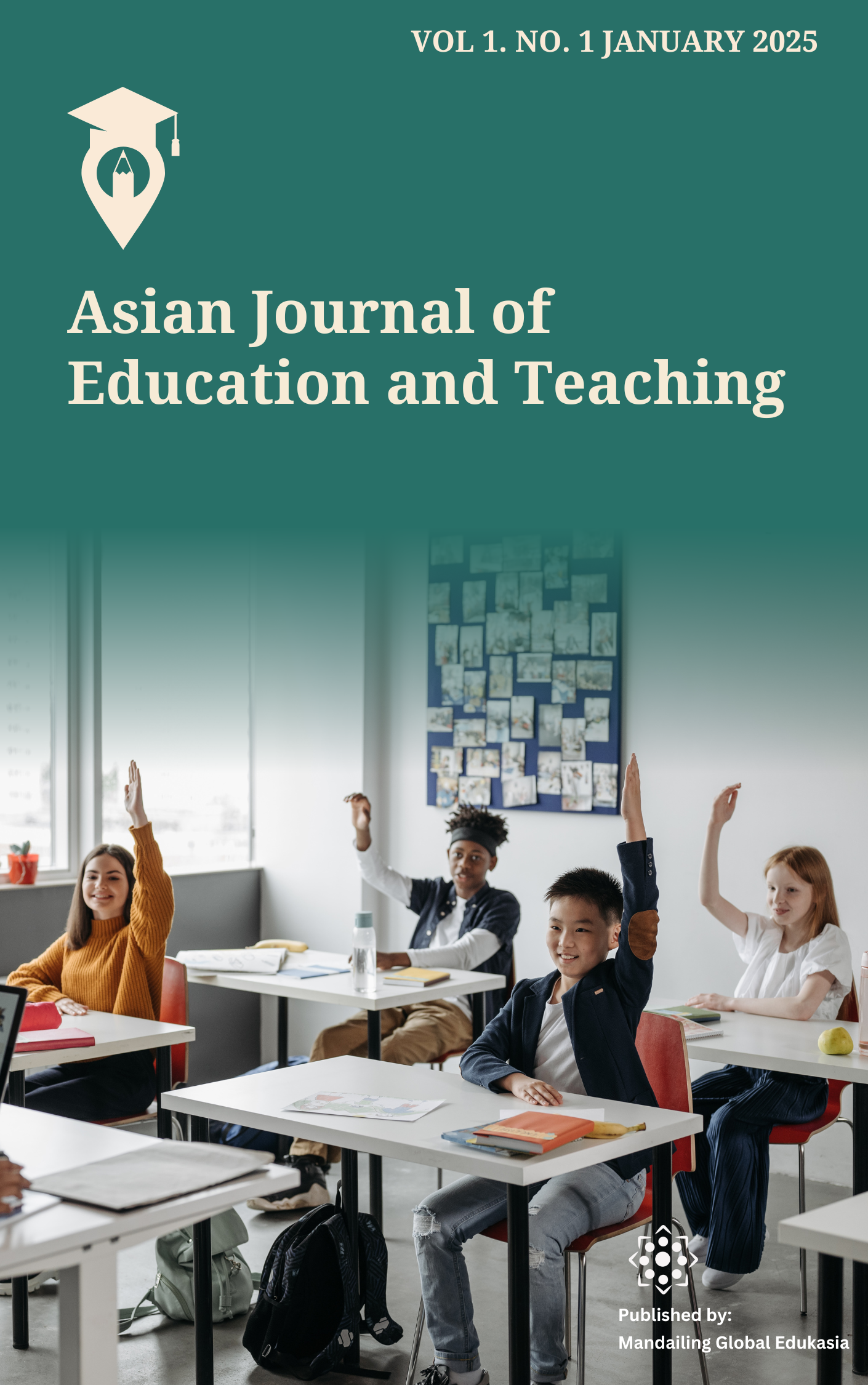
Improving Students' Understanding at State Elementary School 1303 Siborong Borong About Asmaul Husna With A Problem Based Learning Approach
DOI:
https://doi.org/10.62945/ajet.v1i1.124Keywords:
improving Students’, Problem Based LearningAbstract
This study aimed to investigate the effectiveness of the Problem-Based Learning (PBL) approach in improving students' understanding of Asmaul Husna at State Elementary School 1303 Siborong Borong. The research was conducted with a group of 30 students in grade 1, focusing on enhancing both their cognitive and emotional engagement with the subject. The PBL approach was implemented in two cycles, with each cycle including planning, action, observation, and reflection phases. Students were introduced to real-world problems related to the names of Allah, encouraging them to explore their meanings and apply them in their daily lives through collaborative group work and creative tasks. The results indicated significant improvements in students' understanding of Asmaul Husna, as evidenced by the positive changes in both the pre- and post-assessment scores. Students demonstrated a deeper understanding of the names, moving beyond rote memorization to articulate their meanings and applications in real-life contexts. Additionally, the PBL approach fostered increased student motivation and engagement, with students showing greater enthusiasm and interest in the subject compared to traditional methods. Furthermore, the study highlighted the value of collaborative learning in enhancing social skills such as teamwork, communication, and problem-solving. Although there were initial challenges, such as students’ difficulties with the open-ended nature of the problems and unequal participation in group work, these issues were addressed over time, leading to improved collaboration and autonomy among the students. In conclusion, the findings suggest that the PBL approach is an effective teaching strategy for religious education, particularly in helping students develop a deeper understanding of Asmaul Husna. The study emphasizes the importance of active, student-centered learning methods in fostering both cognitive and emotional growth in students.
Downloads
References
Arikunto, S. (2002). Prosedur Penelitian. Bandung: Rineka Cipta.
Dasopang, M. D., Lubis, A. H., & Dasopang, H. R. (2022). How do Millennial Parents Internalize Islamic Values in Their Early Childhood in the Digital Era? AL-ISHLAH: Jurnal Pendidikan, 14(1), 697–708.
Dasopang, M. D., Nasution, I. F. A., & Lubis, A. H. (2023). The Role of Religious and Cultural Education as A Resolution of Radicalism Conflict in Sibolga Community. HTS Theological Studies, 79(1), 1–7.
Erawadi, E., Hamka, H., & Juliana, F. (2017). The Analysis of Student’s Stressed Syllables Mastery at Sixth Semester of TBI in IAIN Padangsidimpuan. English Education: English Journal for Teaching and Learning, 5(1), 44–57.
Fatimah, A., & Maryani, K. (2018). Visual Literasi Media Pembelajaran Buku Cerita Anak. Jurnal Inovasi Teknologi Pendidikan, 5(1), 61–69. https://doi.org/10.21831/jitp.v5i1.16212
Gogahu, D. G. S., & Prasetyo, T. (2020). Pengembangan Media Pembelajaran Berbasis E-Bookstory untuk Meningkatkan Literasi Membaca Siswa Sekolah Dasar. Jurnal Basicedu, 4(4), 1004–1015.
Hamka, H. (2023). The Role of Principals on Teacher Performance Improvement in a Suburban School. QALAMUNA: Jurnal Pendidikan, Sosial, Dan Agama, 15(1), 371–380.
Hamka, H., Suen, M.-W., Anganthi, N. R. N., Haq, A. H. B., & Prasetyo, B. (2023). The Effectiveness of Gratitude Intervention in Reducing Negative Emotions in Sexual Abuse Victims. Psikohumaniora: Jurnal Penelitian Psikologi, 8(2), 227–240.
Harahap, S. M., & Hamka, H. (2023). Investigating the Roles of Philosophy, Culture, Language and Islam in Angkola’s Local Wisdom of ‘Dalihan Na Tolu.’ HTS Teologiese Studies/Theological Studies, 79(1), 8164.
Hendrawati, S., Rosidin, U., & Astiani, S. (2020). Perilaku hidup bersih dan sehat (PHBS) siswa/siswi di sekolah menengah pertama negeri (SMPN). Jurnal Perawat Indonesia, 4(1), 295–307. https://doi.org/https://doi.org/10.32584/jpi.v4i1.454
Lubis, A. H. (2019). Upaya Peningkatan Hasil Belajar Siswa Sekolah Dasar melalui Model Cooperative Learning Tipe Numered Heads Together. FORUM PAEDAGOGIK, 11(2), 127–143.
Lubis, A. H. (2023). The Interactive Multimedia Based on Theo-Centric Approach as Learning Media during the Covid-19 Pandemic. JPI (Jurnal Pendidikan Indonesia), 12(2), 210–222.
Lubis, A. H., & Dasopang, M. D. (2020). Pengembangan Buku Cerita Bergambar Berbasis Augmented Reality untuk Mengakomodasi Generasi Z. Jurnal Pendidikan: Teori, Penelitian, Dan Pengembangan, 5(6), 780–791.
Lubis, A. H., Dasopang, M. D., Ramadhini, F., & Dalimunthe, E. M. (2022). Augmented Reality Pictorial Storybook: How does It Influence on Elementary School Mathematics Anxiety? Premiere Educandum: Jurnal Pendidikan Dasar Dan Pembelajaran, 12(1), 41–53.
Lubis, A. H., & Wangid, M. N. (2019). Augmented Reality-assisted Pictorial Storybook: Media to Enhance Discipline Character of Primary School Students. Mimbar Sekolah Dasar, 6(1), 11–20. https://doi.org/10.17509/mimbar-sd.v6i1.16415
Lubis, A. H., Yusup, F., Dasopang, M. D., & Januariyansah, S. (2021). Effectivity of Interactive Multimedia with Theocentric Approach to the Analytical Thinking Skills of Elementary School Students in Science Learning. Premiere Educandum: Jurnal Pendidikan Dasar Dan Pembelajaran, 11(2), 215–226.
Manshur, U., & Ramdlani, M. (2019). Media audio visual dalam pembelajaran PAI. Al-Murabbi:Jurnal Pendidikan Agama Islam, 5(1), 1–8.
Mardhiyah, R. H., Aldriani, S. N. F., Chitta, F., & Zulfikar, M. R. (2021). Pentingnya Keterampilan Belajar di Abad 21 sebagai Tuntutan dalam Pengembangan Sumber Daya Manusia. Lectura: Jurnal Pendidikan, 12(1), 29–40.
Ningsih, Y. S., Mulia, M., & Lubis, A. H. (2023). Development of Picture Storybooks with TheoAnthropoEco Centric Approach for Elementary School Students. AL-ISHLAH: Jurnal Pendidikan, 15(2), 1888–1903.
Nurhidayah, I., Asifah, L., & Rosidin, U. (2021). Pengetahuan , Sikap dan Perilaku Hidup Bersih dan Sehat pada Siswa Sekolah Dasar. 13(1), 61–71. https://doi.org/10.32528/ijhs.v13i1.4864
Pebtiyanti, I., Ahmad, A., Dzaky, M., Fauziah, S. N., Rendi, & Puspitasari, P. (2023). Peran kurikulum merdeka dalam meningkatkan harmonisasi antara masyarakat dan sekolah. Jurnal Pacu Pendidikan Dasar, 3(1), 269–277. https://doi.org/https://doi.org/10.22021/pacu.v3i1.411
Rahmah, S., & Lubis, A. H. (2024). Problem Posing as a Learning Model to Improve Primary School Students’ Mathematics Learning Outcomes in Gayo Lues. Journal of Indonesian Primary School, 1(4), 93–104.
Rahman, A., Munandar, S. A., Fitriani, A., Karlina, Y., & Yumriani. (2022). Pengertian Pendidikan, Ilmu Pendidikan dan Unsur-Unsur Pendidikan. Al Urwatul Wutsqa: Kajian Pendidikan Islam, 2(1), 1–8.
Ranisa, R., Erawadi, E., & Hamka, H. (2018). Students’ Mastery in Identifying Adverbs at Grade VIII SMPN 2 Batang Toru Tapanuli Selatan. ENGLISH EDUCATION JOURNAL: English Journal for Teaching and Learning, 6(2), 241–252.
Ricardo, R., & Meilani, R. I. (2017). Impak Minat dan Motivasi Belajar terhadap Hasil Belajar Siswa. Jurnal Pendidikan Manajemen Perkantoran (JPManper), 2(2), 188–201.
Santi, Undang, & Kasja. (2023). Peran Guru PAI dalam Membentuk Karakter Peserta Didik di Sekolah. Jurnal Pendidikan Tambusai, 7(2), 16078–16084. https://doi.org/https://doi.org/10.31004/jptam.v7i2.8918
Sugiyono. (2018). Metode Penelitian Kuantitatif Kualitatif dan R&D. Bandung: Alfabeta.